Diagnosis of Hernia
Overview
Inguinal hernia occurs when tissue protrudes, Like part of the intestine, Through a weak area in the abdominal muscles. The resulting lump can be painful. Especially when you cough, bend over, or lift a heavy object.
An inguinal hernia isn’t necessarily dangerous. However, It does not improve on its own and can lead to life-threatening complications. Surgery is required to repair an inguinal hernia, which is painful. Inguinal hernia repair is a common surgical procedure.
Symptoms
Inguinal hernia signs and symptoms include:
- Swelling of the area on one side of the pubic bone, And it becomes clearer when standing, Especially when coughing or straining “during urination or defecation.”
- Feeling of burning or pain at the site of the bulge.
- Pelvic pain or discomfort in the pubic region, Especially when you bend forward, Or when coughing or lifting a certain thing.
- Feeling of heaviness or pulling in the pubic area.
- Weakness or pressure in the pubic area.
- Sometimes, Pain and swelling occur around the testicles when the intestine hangs down into a hernia that extends into the scrotum.
An inguinal hernia isn’t necessarily dangerous. However, It does not improve on its own and can lead to life-threatening complications. Surgery is required to repair an inguinal hernia, which is painful. Inguinal hernia repair is a common surgical procedure.

Signs of danger that you should watch out for:
If you are not able to push the hernia back in, The contents of an inguinal hernia may be trapped (strangled) within the abdominal wall. An inguinal hernia can become strangulated, This cuts off blood flow to the retained tissue. Untreated, an inguinal hernia can be life-threatening.
Signs of strangulated inguinal hernia may include:
- Nausea, vomiting, or both
- fever
- Sudden pain that worsens rapidly
- A hernia is a loose swelling that turns red. Or purple, Or dark
- Inability to have a bowel movement or pass gas
The reasons
Inability to have a bowel movement? Are there no apparent causes for some cases of inguinal hernia? Passing gas Others happen as a result of the following:
- Increased pressure on the abdominal muscles
- A preexisting weak point of muscle in the abdominal wall
- Straining during bowel movements or urination
- Violent physical activity
- Pregnancy
- Chronic coughing or sneezing
And in many cases, Inguinal hernia occurs from the time of birth as a result of weakening of the abdominal wall; This is because the lining of the abdomen (peritoneum) is not closed properly. And other types of inguinal hernia arise with age. This causes muscle weakness or damage, Violent physical activity, Or cough resulting from smoking.
Muscles can also weaken later in life. Especially after an injury or abdominal surgery.
In men, the weak spot usually originates in the inguinal canal; The location of the passage of the spermatic cord to reach the scrotum. As for women, the inguinal canal bears a ligament that helps hold the uterus in place. Sometimes a hernia arises when uterine connective tissue adheres to the tissue surrounding the pubic bone.
Risk factors
Factors that contribute to the development of an inguinal hernia include:
- Males. Men are eight times more likely to develop an inguinal hernia than women.
- Old age. Muscles weaken as you age.
- White people.
- Family history. You have a close relative, Such as a parent or brother or sister who suffers from the condition.
- Chronic cough, Like the product from smoking.
- Chronic constipation. Constipation causes straining during bowel movements.
- Pregnancy Being pregnant can weaken the abdominal muscles and cause extra pressure inside your abdomen.
- Premature labor and low birth weight.
- Previous inguinal hernia or hernia repair. Even if your previous hernia occurred during childhood, You are more likely to have another inguinal hernia.
Complications
Inguinal hernia complications include:
- Squeeze the surrounding tissues. Most inguinal hernia injuries enlarge over time. If not repaired surgically. In men, an inguinal hernia can extend into the scrotum. Which causes pain and swelling.
- Strangulated hernia. If the hernia components are trapped in the weak point in the abdominal wall, It can block the intestine, This leads to severe pain, nausea, and vomiting, Inability to have a bowel movement or pass gas.
- Suffocation A strangulated hernia can cut off the blood supply to part of the intestine. Choking can lead to the death of affected bowel tissue. A strangulated hernia is life-threatening. And immediate surgery is required.
Protection
You cannot prevent a birth defect that puts you at risk of developing an inguinal hernia. but nevertheless, You can relieve stress on your stomach muscles and tissues. For example:
- Maintain a healthy weight. Talk to your doctor about the best exercise and diet plan for you.
- Focus on eating high-fiber foods. Fruits, vegetables, and whole grains contain fiber, which can help prevent constipation and exhaustion.
- Lift heavy objects with caution, Or avoid lifting heavy objects. If something heavy must be lifted, You should always bend at your knees – not your waist.
- Quit Smoking. In addition to its role in infecting many dangerous diseases, Smoking often causes a chronic cough that can lead to or worsen an inguinal hernia.
The diagnosis
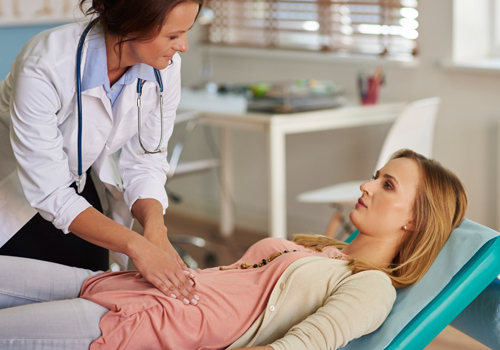
A clinical examination is usually required to diagnose an inguinal hernia. And that is the presence of swelling in the inguinal region. It can also help standing up and coughing to make the hernia more prominent.
If the diagnosis is not easily clear, There are other diagnostic procedures, Such as an abdominal ultrasound, Or a CT scan, Or magnetic resonance.
Treatment - An enlarged or painful hernia usually requires surgery to relieve pain or prevent serious complications.
There are generally two types of hernia surgery – open surgery to repair an open hernia and laparoscopic surgery.
Hernia repair with open surgery
In this surgery, Which may be performed under local anesthesia, sedation or general anesthesia, The surgeon makes an incision in the groin and pushes the protruding tissue back into the abdomen. Then the surgeon stitches the vulnerable area, The sewing is reinforced by an artificial mesh. The hole is then closed with stitches, staples, or surgical glue.
Laparoscopic hernia repair
And to do this surgical procedure, Which requires general anesthesia, The surgeon makes several small incisions in your abdomen. Gas is used to inflate the abdomen, to make the internal organs easier to see.
The surgeon inserts a small tube with a small camera (laparoscope) into one of these incisions. The surgeon inserts tiny instruments through the rest of the incisions to fix the hernia using an artificial mesh.
Laparoscopic hernia repair is better than a surgical incision, as the patient can perform his work faster after the operation, and usually you need a surgeon who is skilled in laparoscopic surgery. As for the rate of hernia recurrence again, all research has not determined a difference between a surgical incision or laparoscopic surgery, but I find that laparoscopic surgery reduces Too much rate of recurrence of the hernia again.
